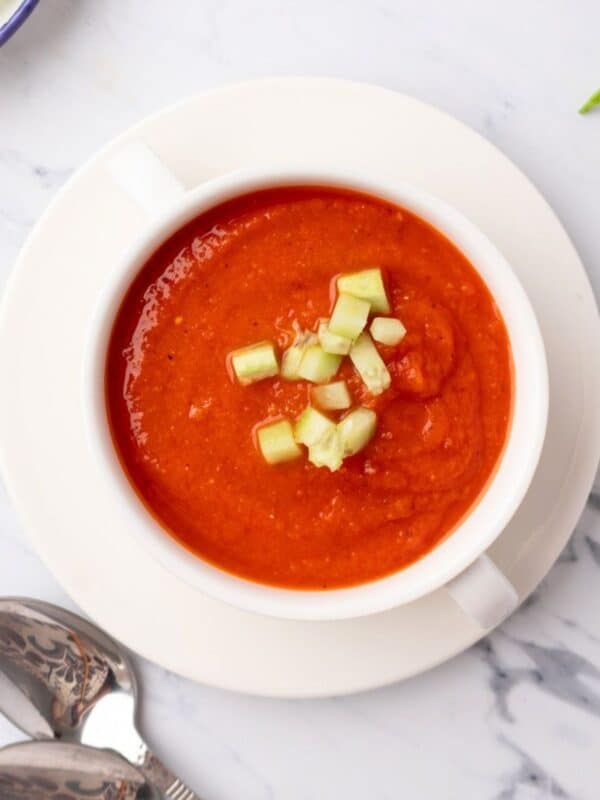
Roasted Tomato Basil Soup
This homemade Roasted Tomato Soup starts with tomatoes roasted until they blister and turn sweet, before blending smooth with roasted garlic, carrots, and a few things you probably already have in the fridge. It's the Dijon mustard, tomato paste, and a splash of balsamic vinegar that set this summer soup apart from all the others. They give the soup a savory, rounded flavor instead of the flat sweetness you get from most tomato soup recipes.
It's creamy from whole milk and Parmesan, no heavy cream required, and it comes together in about an hour from start to finish. Love tomato soup? Try this cold tomato soup next. It's perfect when you have lots of tomatoes but it's too hot for a warm bowl of soup.
Quick Glance at Oven-Roasted Tomato Basil Soup
- 😋 Flavor Profile: Rich, roasted tomato flavor balanced with savory notes from Dijon and Parmesan, and a bright finish from balsamic vinegar.
- 🕒 Total Time:
- 👥 Servings: Makes about 6 cups; 4-6 servings
- 🥄 Texture: Smooth and creamy, thanks to whole milk and Parmesan.
- 👩🍳 Best For: Weeknight dinners, meal prep, and using up a big batch of tomatoes, whether that's a summer garden haul or a container of grape tomatoes in January.
- 💡 Pro Tip: Turn the heat to low before stirring in the milk and Parmesan, and keep it there. Boiling the soup after the dairy goes in is the easiest way to end up with a grainy texture.
- Why Make This Recipe: Most tomato soup recipes lean on sugar to balance acidity and skip anything savory. This one uses roasted carrots for natural sweetness and adds Dijon mustard and balsamic vinegar for depth.
Summarize & Save This Content On
I love the versatility of this roasted tomato and basil soup! It's perfect at the height of summer when the farmers market is overflowing with tomatoes, but also works in the dead of winter with a container of grape tomatoes from the grocery store. Grape tomatoes are reliably sweet no matter the season, which makes this one of the few tomato soups you can make well any time of year.
This recipe came about because I got tired of tomato soup that tasted like ketchup with extra water. Adding a spoonful of Dijon mustard may feel like an odd move for a tomato soup, but it rounds out the flavor and keeps the soup from tasting one-note sweet. The balsamic vinegar does something similar at the very end, brightening everything up right before you serve it.
For more simple vegetable soups, try this cucumber soup recipe and my creamy spinach soup.
Why This Recipe Works
- Roasting concentrates the flavor. The oven drives off extra water and caramelizes the natural sugars in the tomatoes, so the soup tastes deep and rich instead of watery or thin.
- Carrots add sweetness, so there's no added sugar. A lot of tomato soup recipes call for a spoonful of sugar to tame the acidity. Here, the roasted carrots do that job naturally.
- Dijon and balsamic add backbone. These two ingredients are what most tomato soup recipes skip, and they're exactly what keeps this one from tasting like sweetened tomato sauce.
- Parmesan brings salt, savoriness, and body all in one ingredient. It melts right into the soup and thickens it slightly as it goes.
Love tomato-forward soups? Try this unstuffed cabbage roll soup made with tomato sauce and a classic vegetable beef stew with crushed tomatoes.
What I Tested & Why
Tomato soup sounds simple, but it's easy to get wrong. I made this one a handful of different ways before landing here, mostly trying to fix the same problems people mention again and again about many other tomato soup recipes.
| Problem | My Solution |
|---|---|
| Bland, one-note soup | On the first taste, I found the plain roasted tomatoes and broth tasted fine, but a little flat. Adding a spoonful of Dijon mustard and a couple of tablespoons of tomato paste gave the soup a savory depth that I found the broth alone couldn't. You won't taste "mustard" in the finished soup, but it balances the flavors. |
| Overly acidic soup | Tomatoes are naturally acidic and the most common solution is adding sugar. I tested it with sugar first and didn't love how sweet it made the soup taste. Roasted carrots turned out to be the better fix. They add natural sweetness without the soup ever tasting like dessert. |
| Soup that tastes sweet instead of savory | Even after the carrots balanced the acidity, the soup leaned a little too sweet on its own. A small splash of balsamic vinegar stirred in at the very end pulled it back toward savory and gave the whole bowl a brighter finish. |
| Watery, thin texture | This came down to two things. Seeding the Roma tomatoes before roasting cut out a lot of the extra liquid, and roasting itself drove off even more water while concentrating the flavor. Skip either step and the soup comes out noticeably thinner. |
| Curdled or grainy soup after adding dairy | This happened every time I let the soup boil after adding the milk. Turning the heat down to low before stirring in the milk and Parmesan, and never letting it come back to a boil, solved it for good. |
If you love soup in the summer, just like me, try one of these summer soup recipes next!
Ingredients + Substitutions
Here's a closer look at a few ingredients that are worth knowing more about before you start.
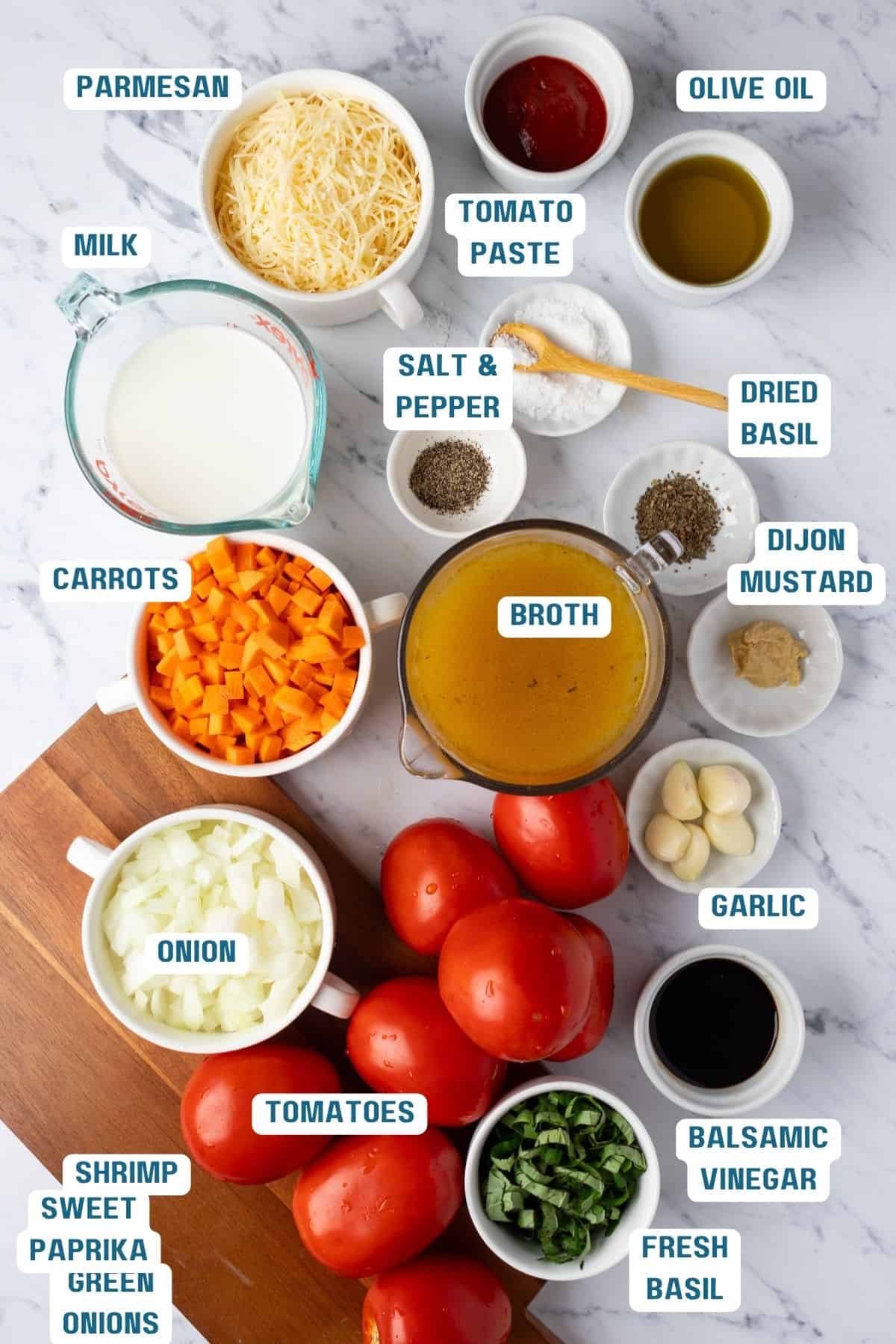
- Tomatoes: Grape tomatoes or halved, seeded Roma tomatoes both work well. Grape tomatoes are sweet and reliable no matter the season, so they're a great choice in winter when good Romas are hard to find. If you use Romas, seed them first so the soup doesn't turn out watery.
- Garlic: The whole cloves roast right alongside the tomatoes and turn soft and mellow. Keep an eye on them, since garlic can brown faster than the tomatoes and turn bitter if it goes too far. I find leaving the cloves whole works best for avoiding this issue.
- Tomato paste: Adds concentrated tomato flavor plus a little extra body. I also use tomato paste in this hamburger soup in the Instant Pot.
- Parmesan cheese: Freshly grated melts the smoothest. The pre-shredded kind in the bag is coated in a starch to keep it from clumping, and that same starch can make your soup a little grainy.
- Balsamic vinegar & Dijon mustard: We use a small amount of each but they both do a lot to add flavor and brighten the whole bowl.
- Broth: Use low-sodium broth if you can find it. Different brands season their broth differently, so it's best to salt the soup at the end, once everything else is in the pot.
Check the recipe card below for the full ingredient list and quantities of each one.
Dietary Modifications & Variations
This recipe is written the way I like it best, but here are a few easy ways to make it your own once you've tried it as written.
- Dairy-free: Swap the milk for full-fat coconut milk and leave out the Parmesan. A spoonful of nutritional yeast or vegan Parmesan can help fill in that savory flavor.
- Extra creamy: Use up to ½ cup of heavy cream or half-and-half in place of the whole milk.
- Roasted red pepper: Add a halved red bell pepper to the sheet pan with the tomatoes for extra sweetness and color.
- Give it a kick: Stir in red chili flakes or a small pinch of Calabrian chili for heat.
- Chunky instead of smooth: Blend for less time, or pulse it with an immersion blender, if you like a little texture left in your soup.
- Turn it into dinner: Stir in a can of drained white beans or some cooked cheese tortellini after blending for a heartier, one-bowl meal.
How to Make Roasted Tomato Basil Soup
To get started, preheat the oven to 400°F and gather all your ingredients together.
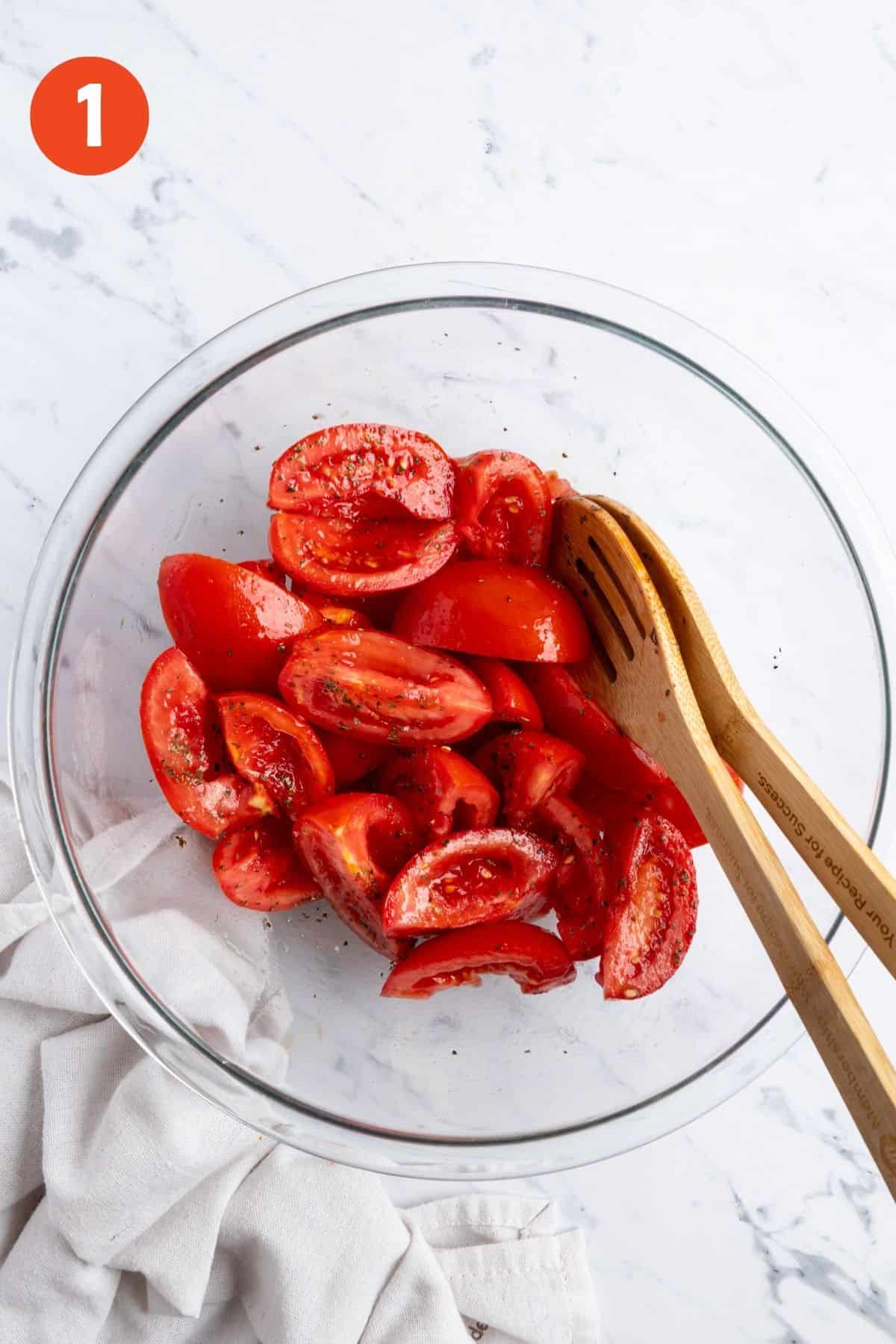
Step 1: Prep the tomatoes. If using Roma tomatoes, cut them in half, scoop out the seeds, and cut into wedges. Combine the tomatoes, garlic cloves, ¼ teaspoon salt, and basil in a mixing bowl. Drizzle with 1 tablespoon olive oil and toss until evenly coated.
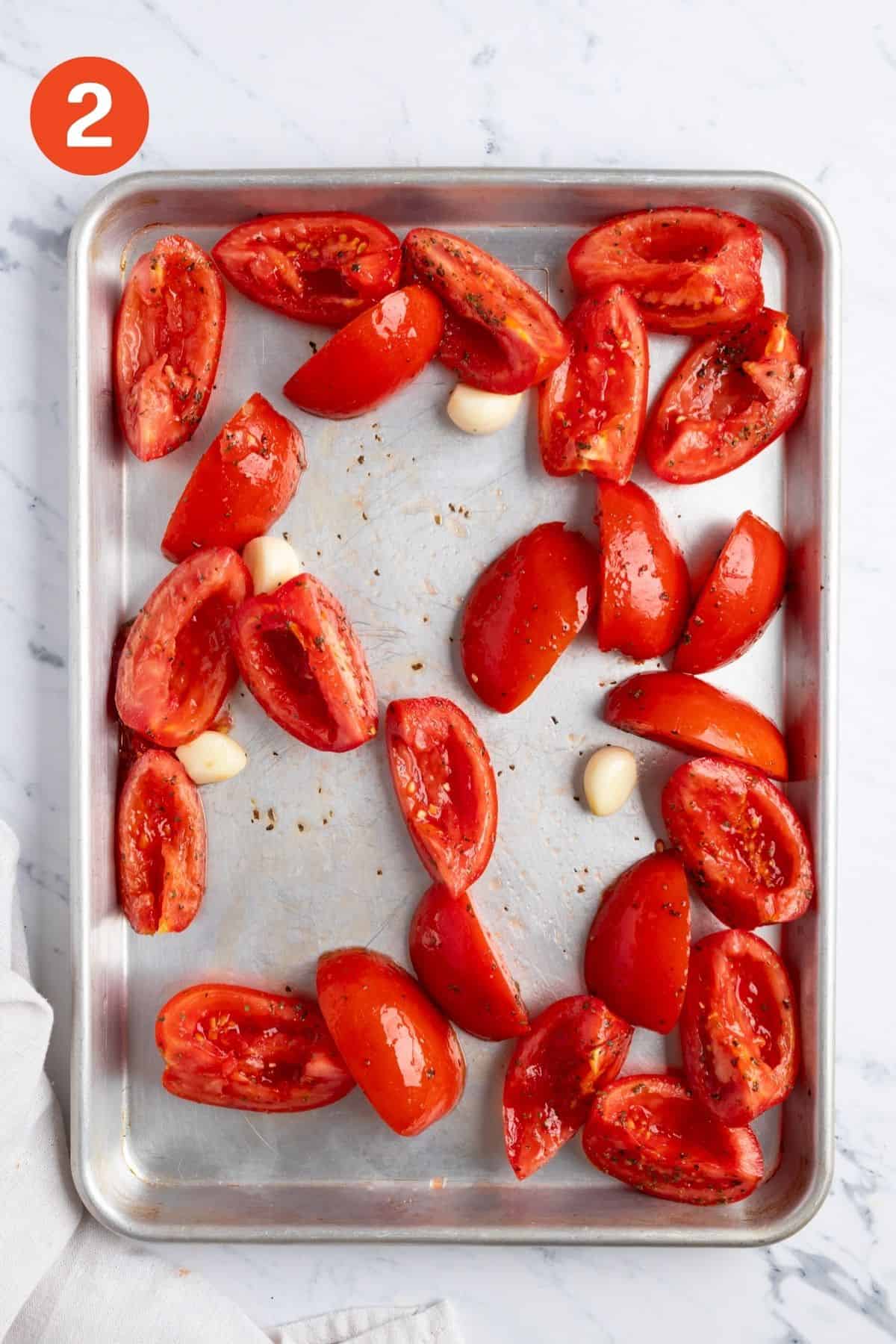
Step 2: Roast the tomatoes. Pour the tomatoes onto the prepared baking sheet and bake for 25-30 minutes or until they have split and are aromatic. Remove the tomatoes from the oven and set aside.
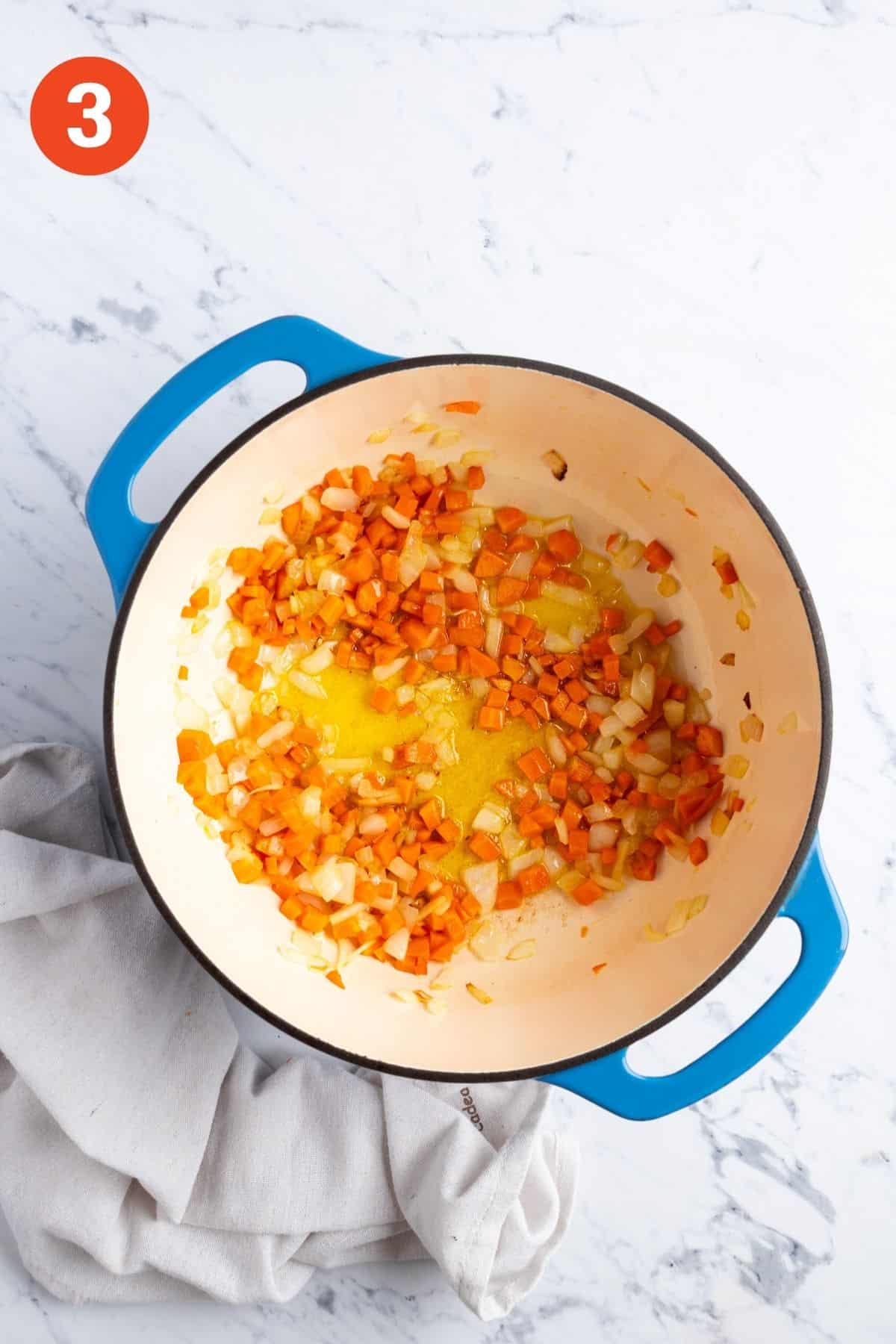
Step 3: Cook the carrots and onions. Heat the remaining 2 tablespoons of olive oil in a large pot or Dutch oven over medium heat. Add the onion and carrots, and sauté for 7-8 minutes until the onions are tender and lightly golden.
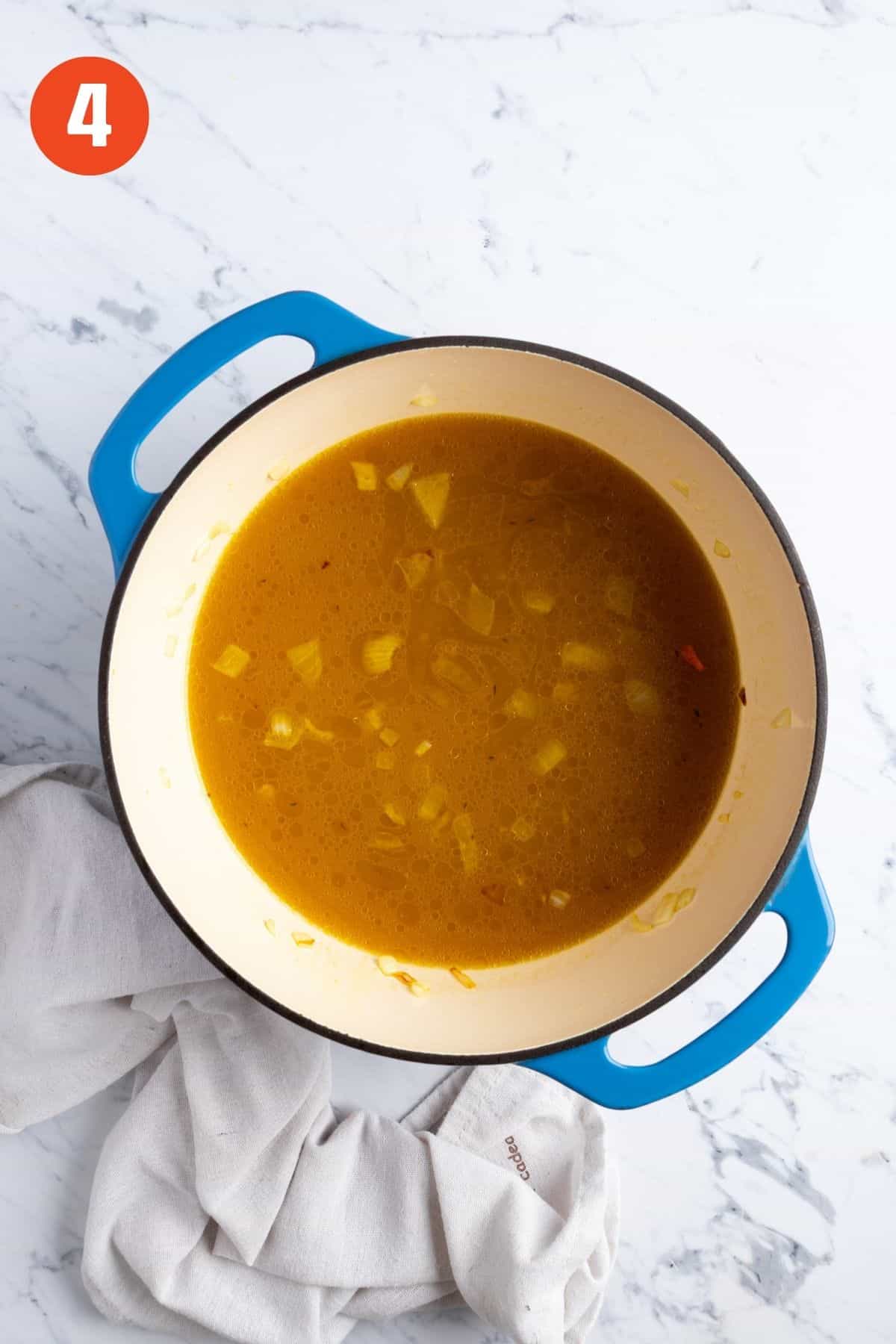
Step 4: Add broth and simmer. Pour in the broth and increase the heat to medium-high. Once the soup simmers, reduce the heat to medium and cook for 10 minutes.
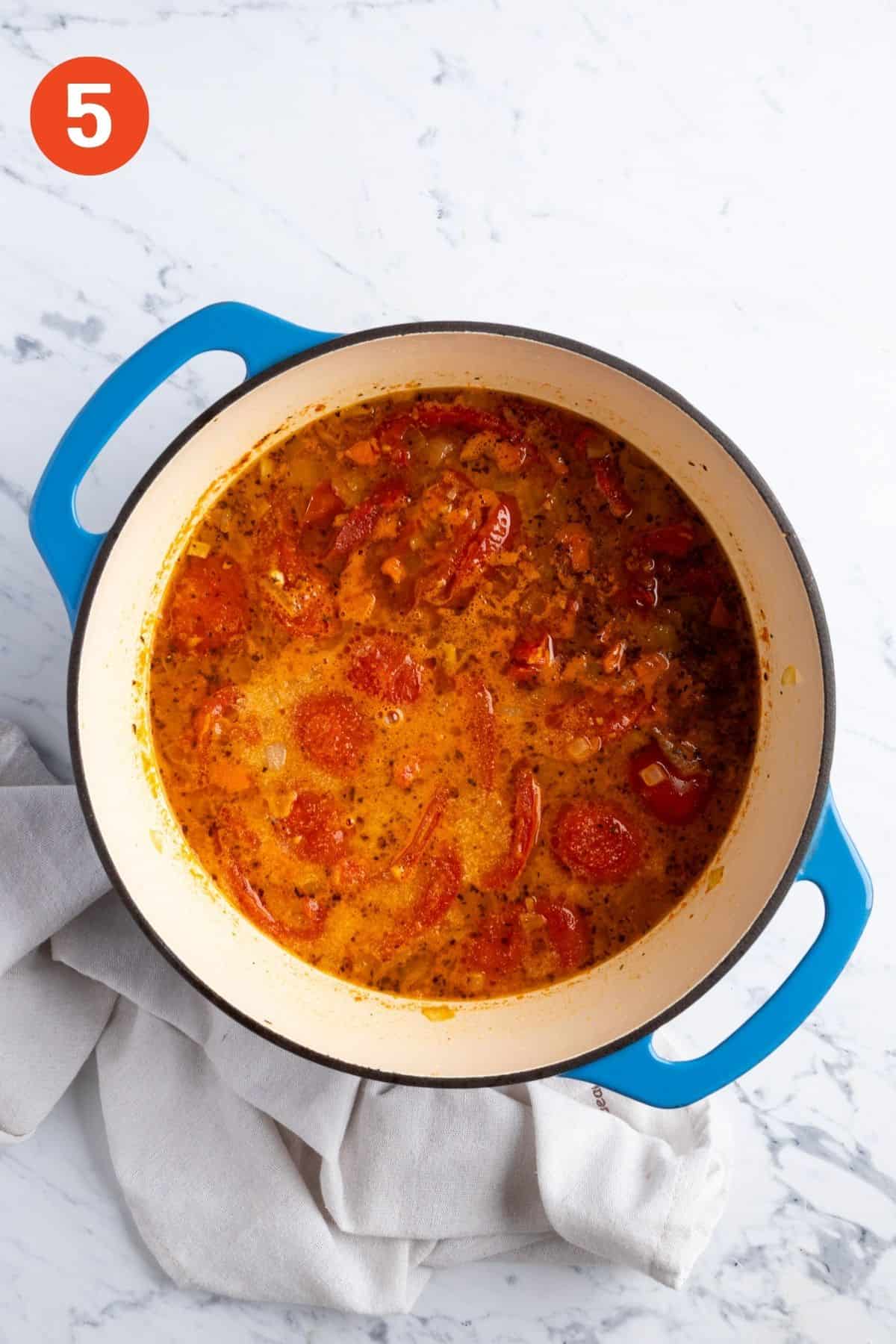
Step 5: Add tomatoes. Add the roasted tomatoes, Dijon mustard, tomato paste, and the remaining ¾ teaspoon salt to the pot. Return to a simmer and cook for 10 more minutes. When done, turn off the heat.
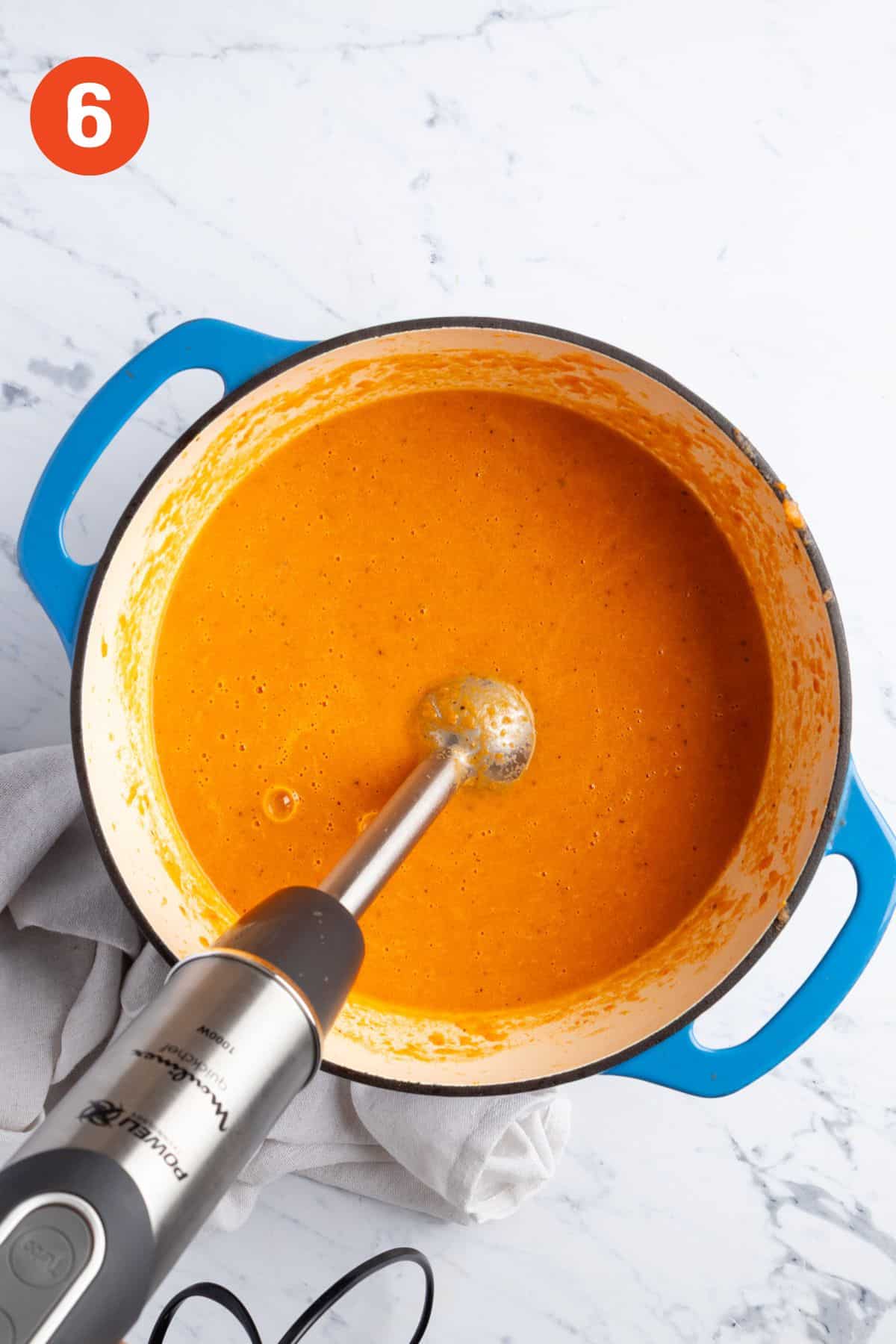
Step 6: Add the dairy. Pour in the milk and then carefully blend with an immersion blender. You can also very carefully transfer the soup to a high-speed blender and blend with the lid vented until smooth or to your desired consistency.
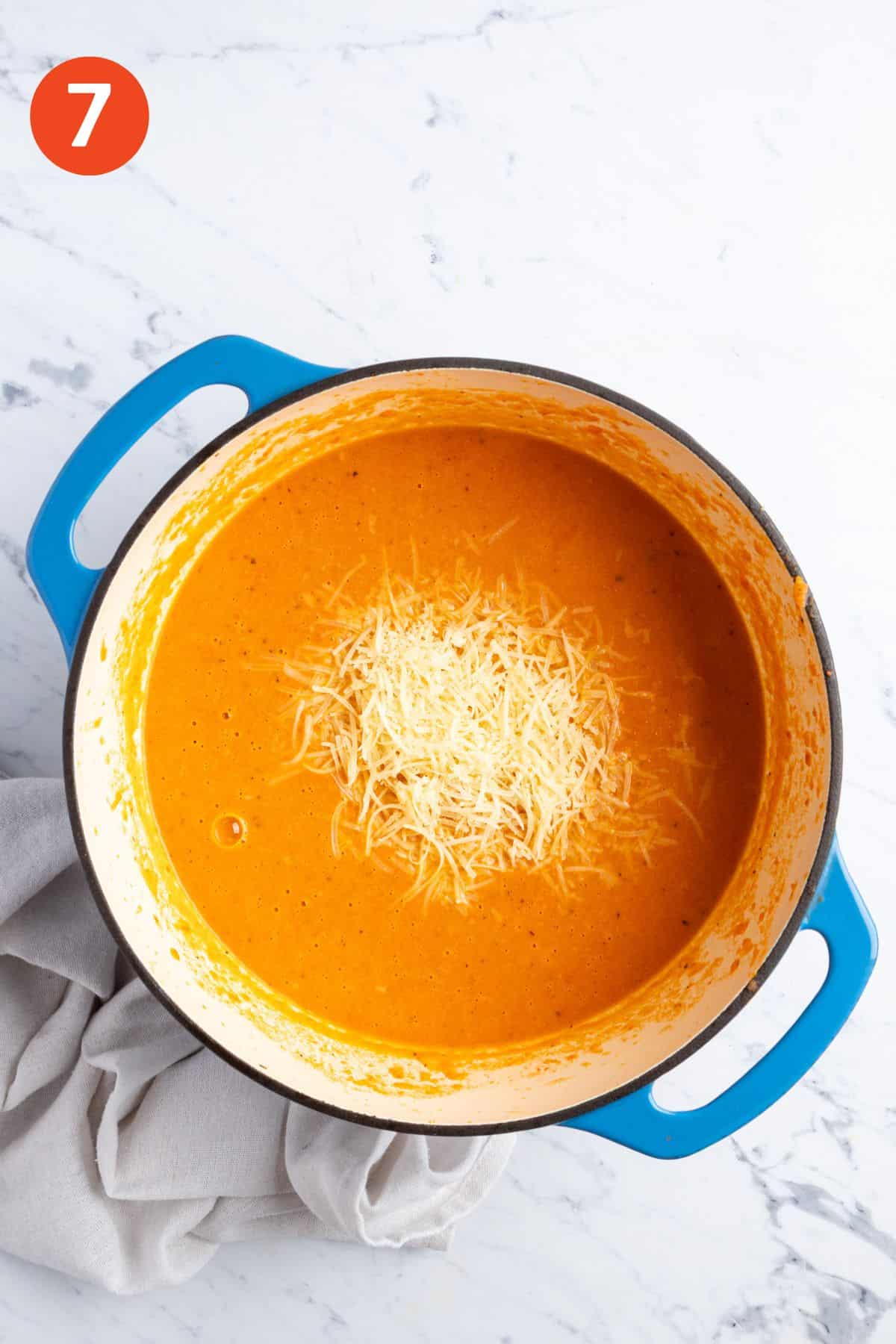
Step 7: Add the cheese. Carefully return the soup to the pot if you used a standard blender. Stir in the parmesan cheese and cook over low heat for 3-5 minutes or until smooth and creamy.
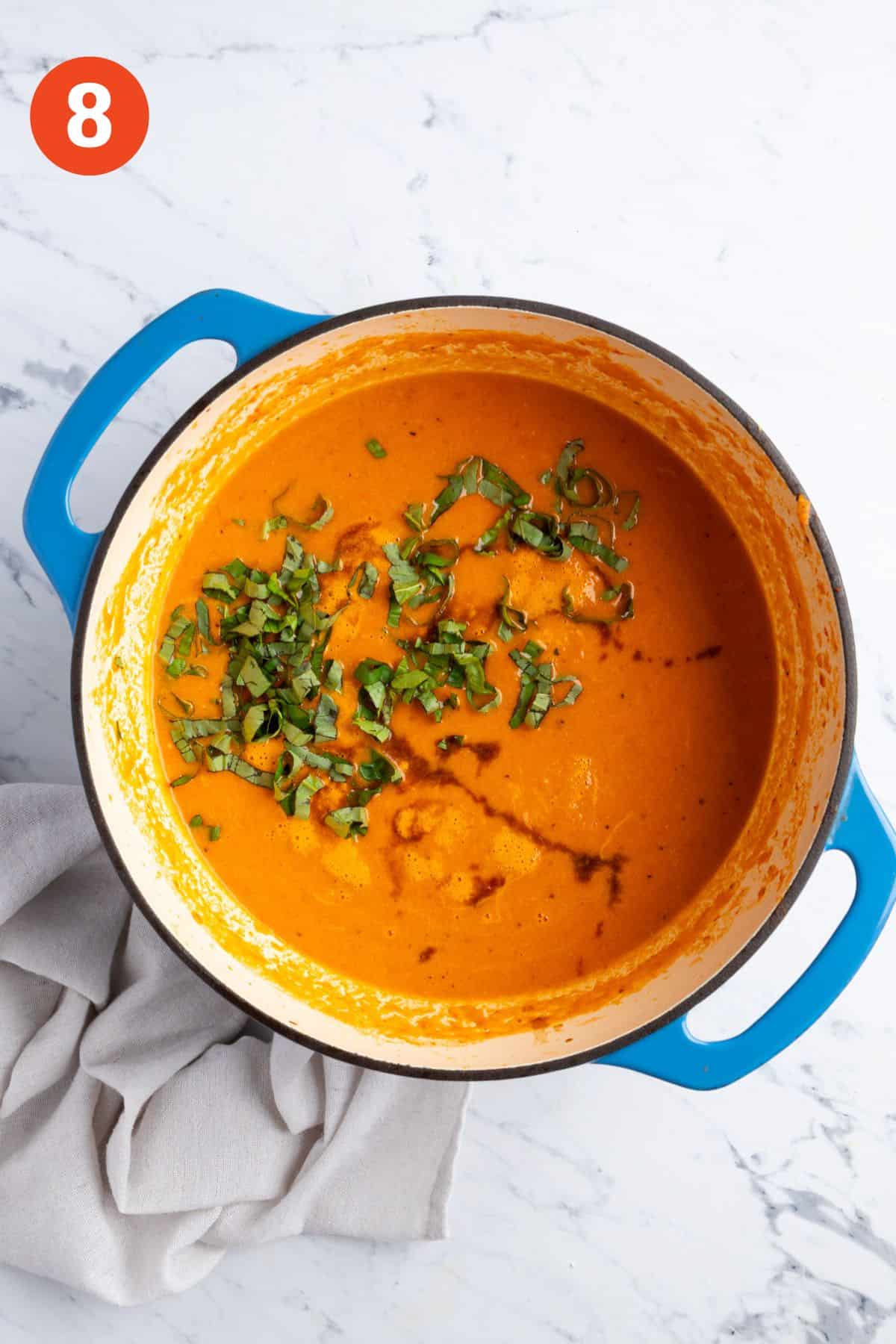
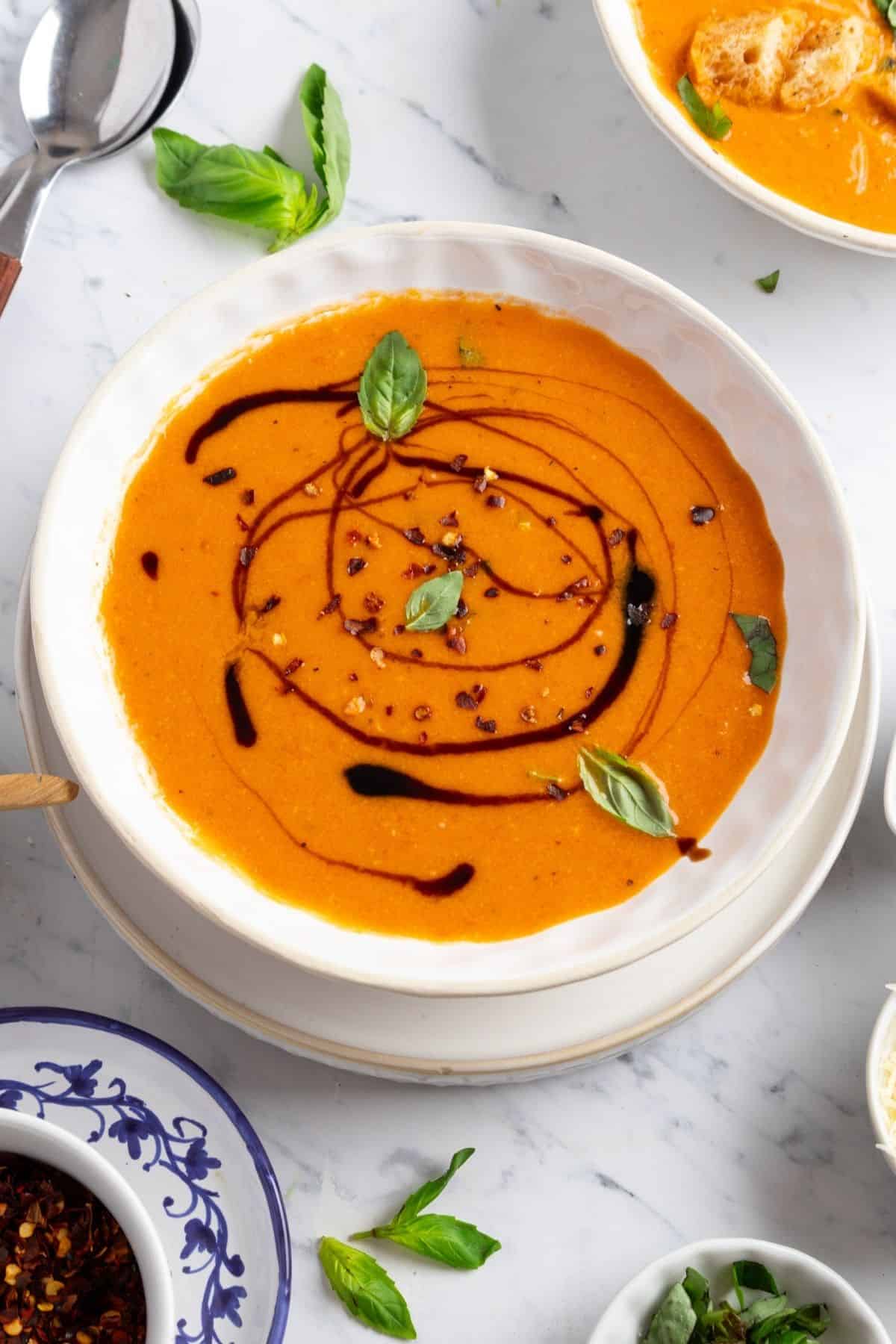
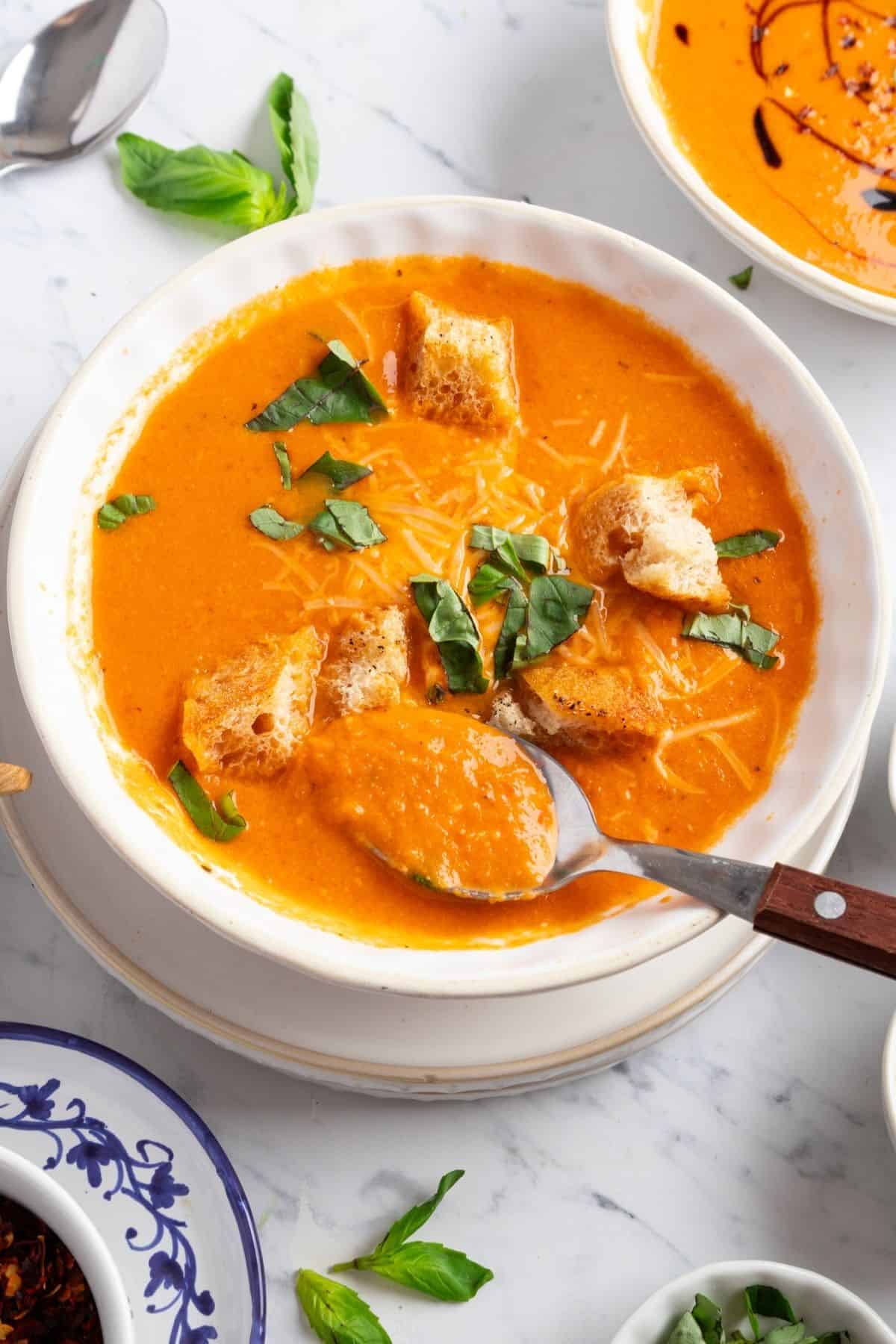
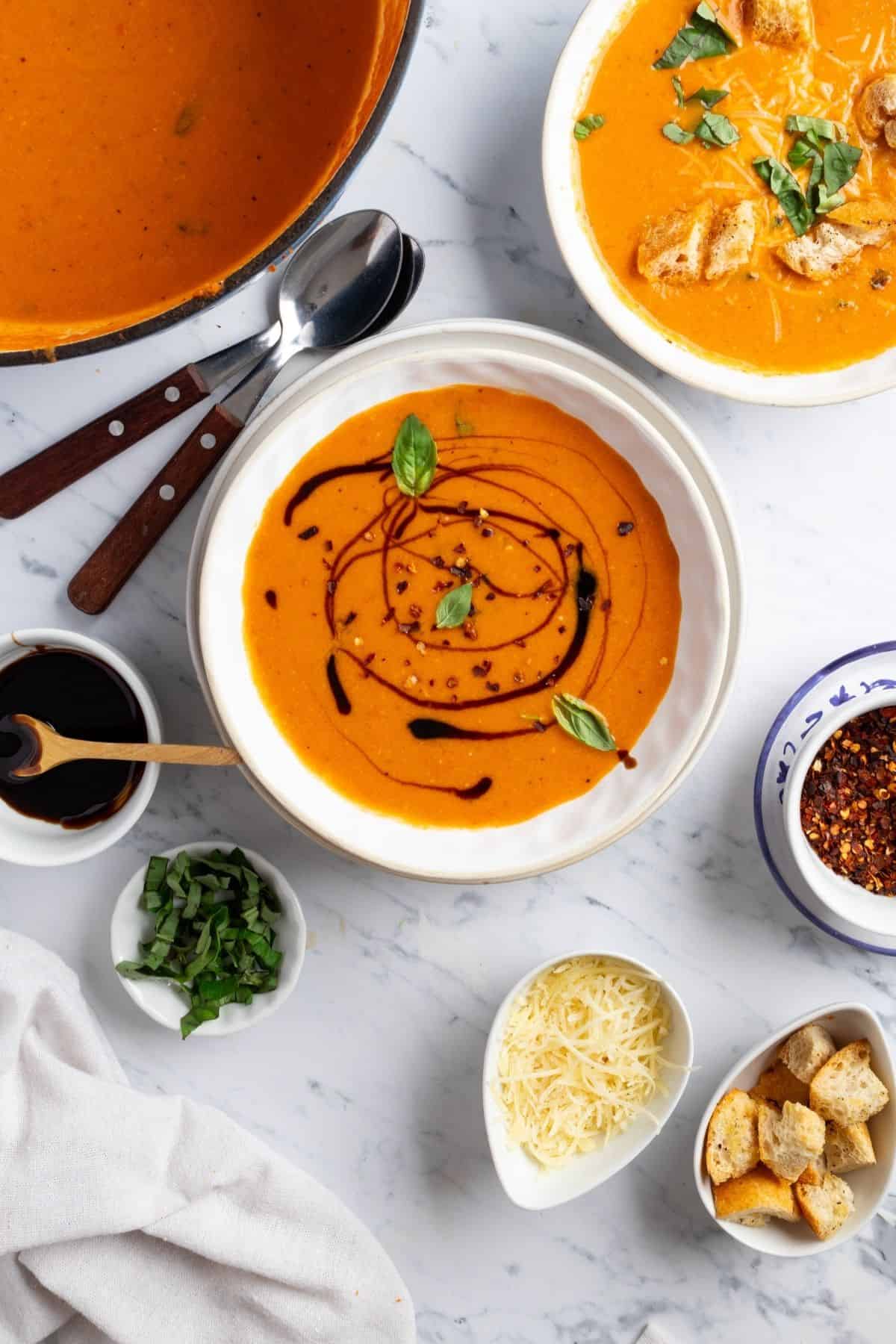
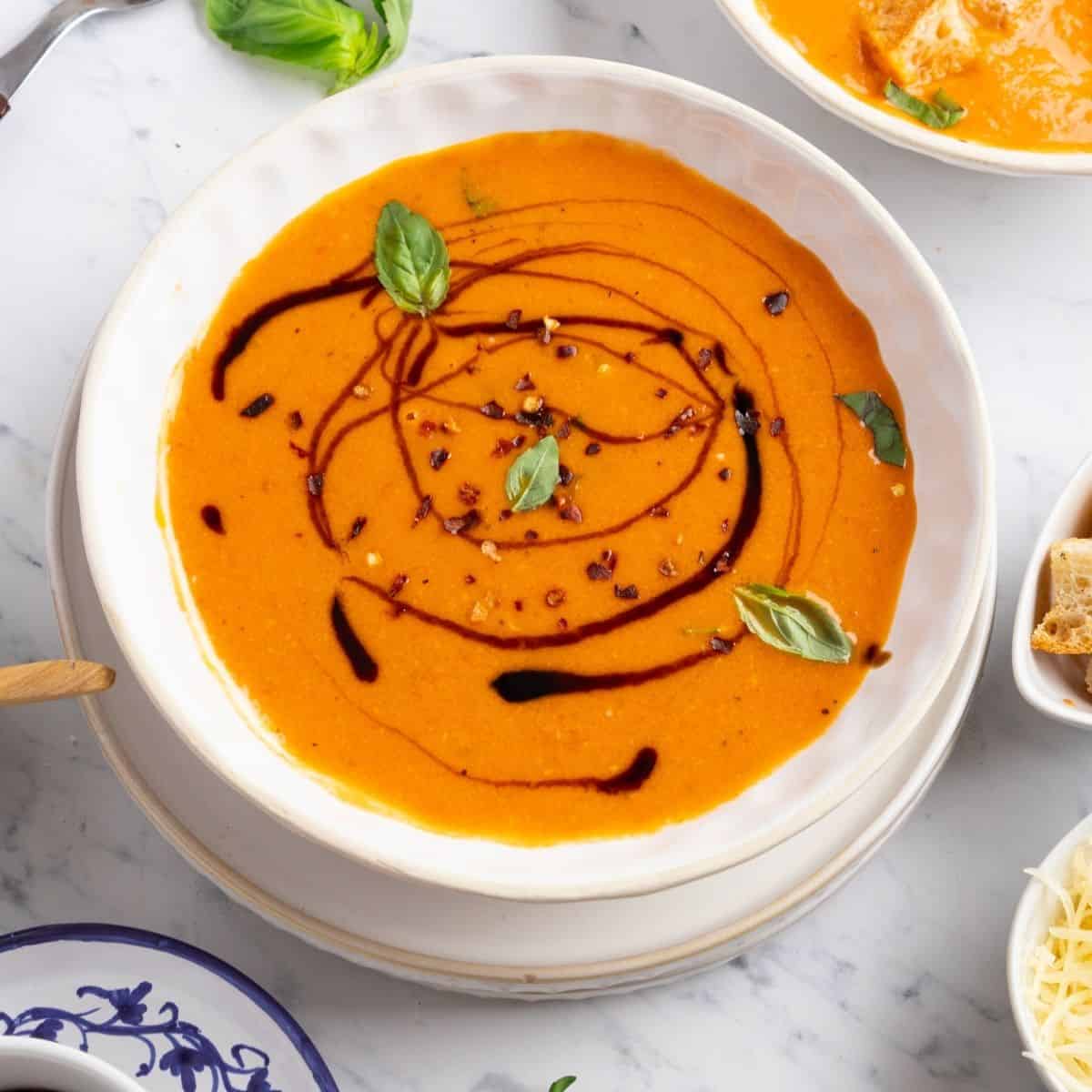
Step 8: Finish the soup. Stir in the basil leaves and balsamic, then season to taste with salt and pepper. Ladle it into bowls and garnish with fresh basil, balsamic glaze, croutons, grated parmesan cheese, and/or red chili flakes. Even better, sprinkle some crispy cornbread croutons on top for crunch. This is one of my favorite ways to dress up a bowl of tomato soup.
Lyn's Top Tips
- Taste and season at the end, not before. Broth brands vary a lot in how salty they are, so hold off on your final salt and pepper until everything is in the pot.
- Adjust the flavor. If your soup tastes flat, add a little more salt or a little extra Parmesan. If it's still a bit too acidic, stir in a ½ teaspoon of sugar at a time.
- Adjust the consistency. If your soup is thinner than you'd like, let it simmer uncovered for a few extra minutes, or stir in another spoonful of tomato paste to thicken it. If your soup is thicker than you'd like, loosen it up with a splash more broth or milk.
- Grate your own Parmesan if you can. It melts smoother than the pre-shredded bags.
- Storing leftovers. Store any leftover soup in an airtight container in the fridge for up to 4 days. If you plan to freeze leftovers, it's best to freeze it before adding the milk and Parmesan, then stir those in fresh after it's reheated. If you've already added the dairy, it will still freeze fine for up to 3 months; however, the texture may turn a bit grainy after thawing.
- Reheating. If frozen, thaw the soup in the fridge overnight. Reheat it low and slow on the stove, whisking as it warms.
Roasted Tomato Basil Soup Recipe FAQs
No, you don't. Since the soup gets blended smooth, the skin breaks down and disappears into the texture. Leaving them on also saves you a step, and they don't add any bitterness once roasted
Not really. This recipe is built around roasting fresh tomatoes, which is where a lot of the flavor comes from, so it's best made with fresh tomatoes. Canned tomatoes are already cooked down and won't roast the same way
Yes, though the texture can turn slightly grainy after thawing, which is common with dairy-based soups. For the smoothest results, freeze the soup before stirring in the milk and Parmesan, then add those fresh once it's reheated.
This usually happens when the tomatoes' natural acidity isn't balanced out. Roasting helps a lot, since it brings out the sweetness the tomatoes already have. This recipe also builds in balance with roasted carrots, Dijon mustard, and a splash of balsamic vinegar at the end, so you shouldn't need to add any sugar.
Soup-er Toppings & Serving Suggestions
A bowl of this creamy tomato basil soup is a full meal on its own, but here are a few of my favorite ways to round it out.
Grilled cheese is the classic pairing for a reason. Try my brie grilled cheese for something a little fancier, or my pizza grilled cheese if you want something fun for the kids.
For dipping, my homemade crusty dinner rolls are worth the extra effort, especially if you have company coming.
If it's too hot out to think about turning on the oven, my spicy gazpacho is a great no-cook, chilled alternative that still scratches that tomato-soup itch.


Roasted Tomato Basil Soup
Equipment
- Sheet Pan
Ingredients
- 3 tablespoons olive oil divided
- 4 cups halved and seeded Roma tomatoes or grape tomatoes
- 5 cloves garlic peeled
- 1 teaspoon salt divided + plus more to taste
- ½ teaspoon dried basil
- 1 medium onion chopped
- 1 cup chopped carrots
- 4 cups 1 quart low-sodium vegetable or chicken broth
- 1 teaspoon smooth Dijon mustard
- 2 tablespoons tomato paste
- 1 cup whole milk
- 1 cup shredded Parmesan cheese preferably freshly grated
- ⅓ cup chopped or chiffonade fresh basil leaves
- 2 teaspoons balsamic vinegar
- Black pepper to taste
- Optional toppings: fresh basil balsamic glaze, croutons, grated parmesan cheese, and/or red chili flakes
Instructions
- Preheat the oven to 400°F and line a rimmed baking sheet with parchment paper.
- Add the tomatoes, garlic cloves, ¼ teaspoon salt, and basil to a mixing bowl. Drizzle with 1 tablespoon olive oil. Toss until evenly coated.
- Pour the tomatoes onto the prepared baking sheet and bake for 25-30 minutes or until they have split and are aromatic. Remove the tomatoes from the oven and set aside.
- While the tomatoes roast, heat the remaining 2 tablespoons of olive oil in a large pot or Dutch oven over medium heat. Add the onion and carrots, and sauté for 7-8 minutes until the onions are tender and lightly golden.
- Pour in the broth and increase the heat to medium-high. Once simmering, reduce the heat to medium and simmer for 10 minutes.
- Add the roasted tomatoes, Dijon mustard, tomato paste, and the remaining ¾ teaspoon salt to the pot. Return to a simmer and cook for 10 more minutes.
- Turn off the heat. Pour in the milk and very carefully transfer the soup to a high-speed blender. Blend with the lid vented until smooth or your desired consistency (alternatively, you can also blend the soup in the pot with an immersion blender).
- Carefully return the soup to the pot. Stir in the parmesan cheese over low heat for 3-5 minutes or until smooth and creamy.
- Stir in the basil leaves and balsamic. Season to taste with salt and pepper and serve hot topped with fresh basil, balsamic glaze, croutons, grated parmesan cheese, and/or red chili flakes.
Recipe Tips
- Use freshly grated Parmesan if you can. The pre-shredded kind is coated in a starch that can leave your soup a little grainy.
- Keep the heat low once you add the milk and Parmesan, and don't let the soup boil. Boiling dairy is the quickest way to end up with a curdled or grainy texture.
- Taste and season right at the end. Broth brands vary a lot in saltiness, so hold off on your final salt and pepper until everything else is in the pot.
- Want it extra creamy? Swap the whole milk for up to ½ cup of heavy cream or half-and-half.