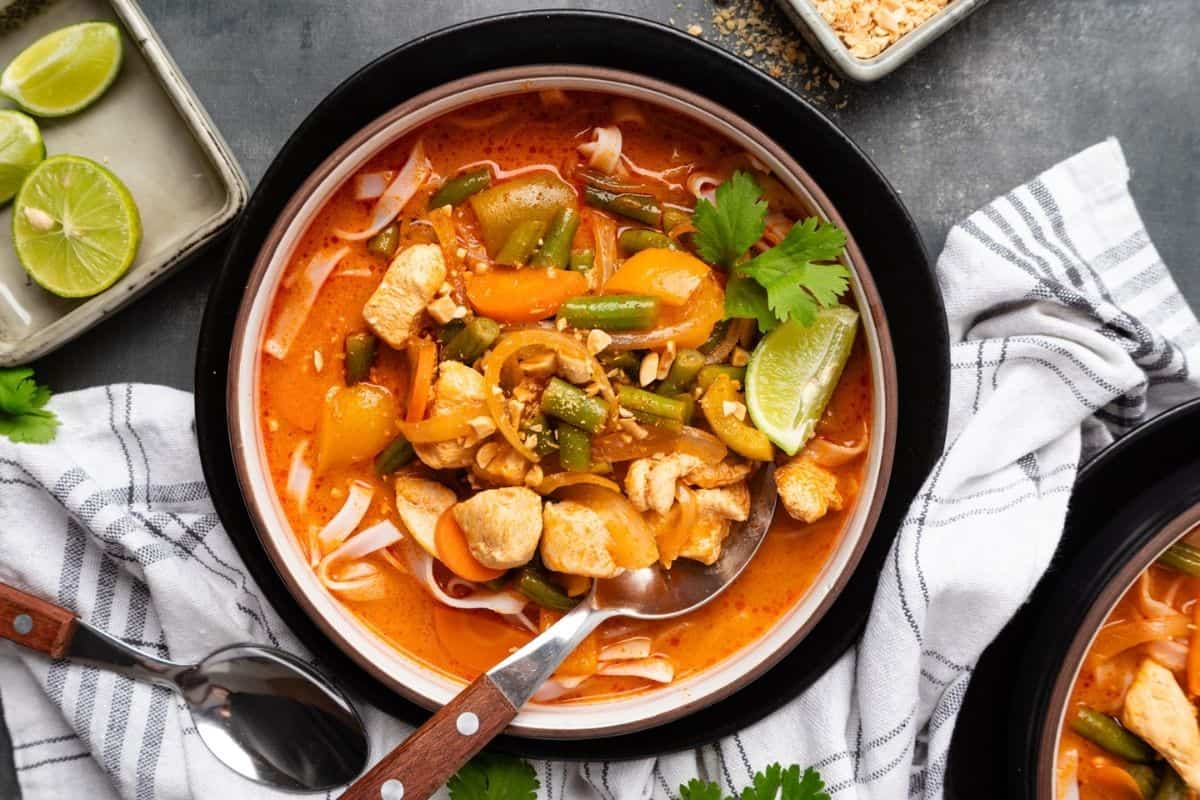
Thai Red Curry Soup
If you love Thai takeout but wish it magically appeared in your kitchen a little more often, this Thai Red Curry Soup is the next best thing. It's cozy, a little creamy, and full of those big, bold flavors-red curry, coconut milk, lime-that make every spoonful so satisfying. And the best part? It comes together fast, so you get that restaurant-style flavor without waiting for delivery.
📌 Soup Summary
- 🍜 Flavor: Creamy coconut broth, warm Thai spices, customizable heat
- ⏱️ Time: 40 minutes start to finish
- 🔥 Spice Level: Mild to medium-easy to adjust by using more or less curry paste
- 🍚 Serving Ideas: Ladle over jasmine rice or rice noodles and finish with herbs, peanuts, and lime
- 💡 Tip: Blooming the curry paste in oil is the secret to deep, takeout-style flavor
Summarize & Save This Content On
If you love a cozy, flavor-packed soup that tastes like it came straight from your favorite Thai spot, this Thai red curry soup with coconut milk is about to become a repeat visitor in your kitchen. It hits all the best notes. It's coconutty, aromatic, just spicy enough, and still comes together fast for a weeknight dinner win. Think of it as comfort food with a little glow-up.
If you enjoy cozy soups with bright flavors, be sure to check out my curried carrot soup next. It's another favorite when I'm craving something warm, colorful, and just a little bit special.
Confessions of a Thai Soup Lover

I've always had a soft spot for Thai soups-there's something magical about that mix of creamy coconut, citrusy lime, and just the right hit of spice.
This version has become one of my go-to "need something delicious now" dinners because it delivers restaurant-level flavor with simple ingredients I usually have on hand. Once you get the hang of adjusting the curry paste for your perfect heat level, this soup becomes such a fun one to riff on. For more spicy flavors, try my chilled spicy gazpacho.
LynIngredients + Substitutions
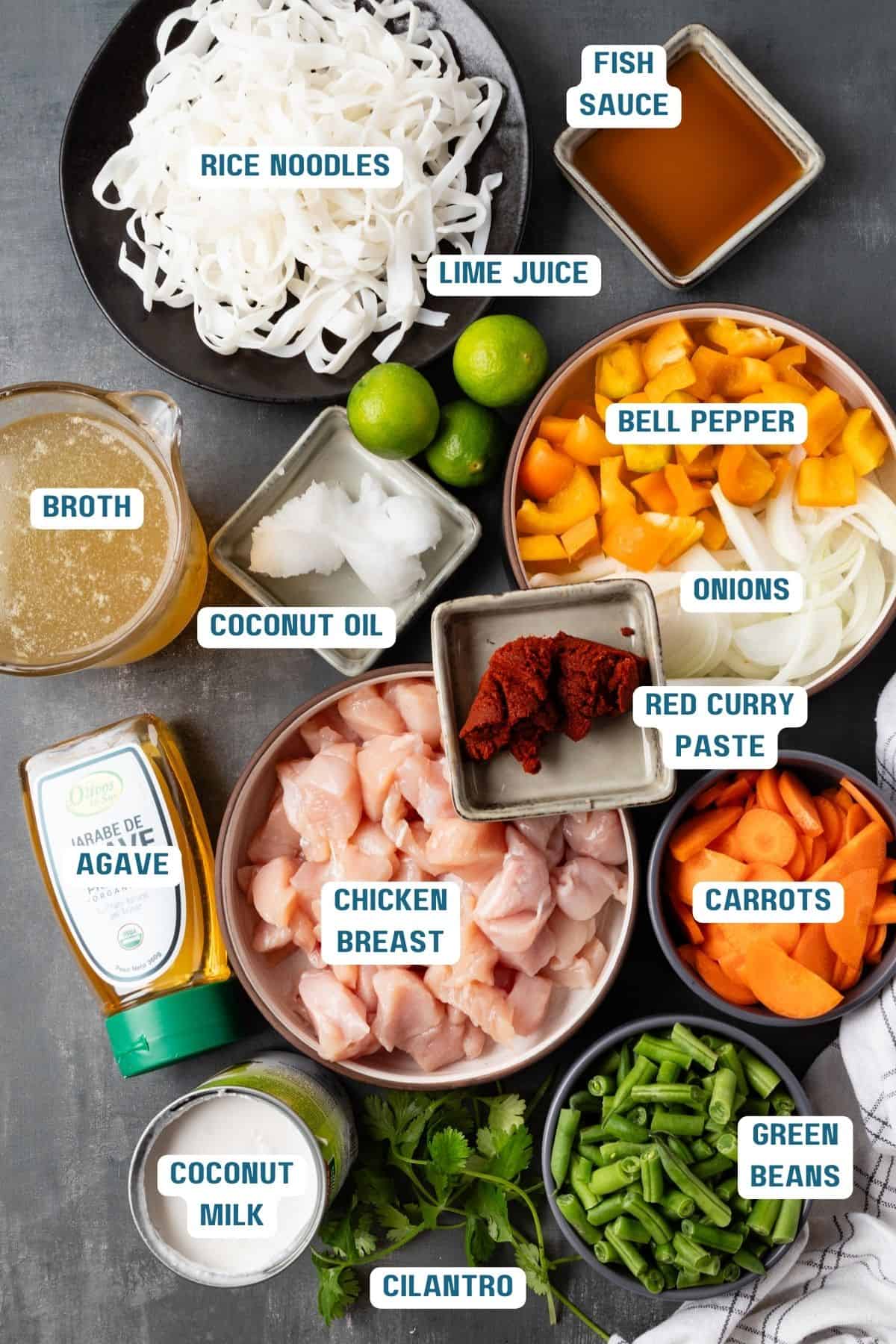
- Coconut oil: Adds richness, boosts the coconut flavor, and helps cook the vegetables and chicken. For the best flavor, use unrefined coconut oil.
- Bell pepper, carrots, onions, and green beans: A colorful mix of veggies that add crunch, natural sweetness, and freshness to balance the warm curry broth.
- Boneless, skinless chicken breasts: A quick-cooking, lean protein that absorbs the curry flavors beautifully.
- Red curry paste: The star of the show, so choose one with warm, spicy, aromatic, and full of classic Thai flavor. Heat varies by brand, so you may need to adjust the amount to taste.
- Coconut milk and chicken broth: The base of Thai red curry soup. Use full-fat canned coconut milk for the most creaminess, along with a hint of sweetness.
- Fresh lime juice: Brightens everything and cuts through the richness of the coconut milk.
- Agave or maple syrup: A touch of sweetness that smooths out the heat and ties together the curry flavors.
- Fish sauce: Adds saltiness and its signature umami depth to the soup. If you aren't a huge fan, you can start with just a tablespoon, and then add salt to the soup to taste.
- Jasmine rice or rice noodles: These are optional for serving. I find that rice makes it heartier, and noodles make it slurpier.
- Cilantro or Thai basil, roasted peanuts, and lime wedges: Fresh herbs, crunch, and a final squeeze of citrus to finish each bowl.
Check the recipe card below for the full ingredient list and quantities of each one.
Choosing the Right Red Curry Paste
Red curry paste is the heart of this Thai noodle soup, and different brands can taste wildly different. Most pastes are made from a blend of red chiles, garlic, lemongrass, shallots, galangal, kaffir lime, coriander root, cumin, and shrimp paste. That mix creates a flavor that's warm, citrusy, slightly smoky, and full of depth-even before it hits the coconut milk.
Because the flavor (and heat!) varies by brand, it's key to make sure to get a high-quality red curry paste.
- Mild - Thai Kitchen: Sold in many grocery stores, so it's easy to find and great for beginners, but it's not a personal favorite of mine. The flavor is pleasant but on the mild side. I may be more appealing to families with kids or anyone who wants something more gentle.
- Spicy & bold - Mae Ploy: The most flavorful (and spiciest!) of the bunch and my go-to brand for all things Thai curry. It has a deeper chile flavor, more savory notes, and a noticeable kick. If you love restaurant-level Thai curries, this one gets you closest-but you'll want to start small if you're heat-sensitive.
If you're new to red curry paste, start with 2-3 tablespoons, then add more once you taste the broth. It's much easier to build heat than take it away! For more tips on choosing a red curry paste, check out this video by Hot Thai Kitchen.

Recipe Variations
Use these swaps to make your Thai curry noodle soup extra flexible and fit different dietary needs:
- Vegetarian or Vegan Thai Curry Soup: Swap the chicken for cubes of tofu, chickpeas, or mixed mushrooms. Instead of the fish sauce, use vegan fish sauce, tamari or soy sauce. Also, be sure to choose a vegetarian red curry paste, like this one by Mekhalah.
- Pescatarian: Swap the chicken for shrimp. Add peeled and deveined shrimp during the last 3-4 minutes of cooking so they stay tender.
- Gluten-Free: Be sure to choose a certified GF red curry paste + GF tamari if you're replacing fish sauce.
- Extra Spicy: Red curry soup is relatively spicy to begin with, but if you want it spicier, you can go up to 5 tablespoons of curry paste. I've also added cayenne pepper to boost the spiciness even more.
- Creamier Broth: If you prefer a creamier consistency, use 2 cans of full-fat coconut milk and reduce the chicken broth to 2-3 cups.
- More Veggies: Snap peas, zucchini, baby spinach, broccoli florets, or mushrooms work beautifully if you want to swap any of the veggies, or simply add more.
- Make it thicker, like a traditional curry: Reduce the broth to 2-3 cups for a richer, thicker consistency that's perfect for spooning over rice or folding into noodles.
How to Make Thai Red Curry Soup
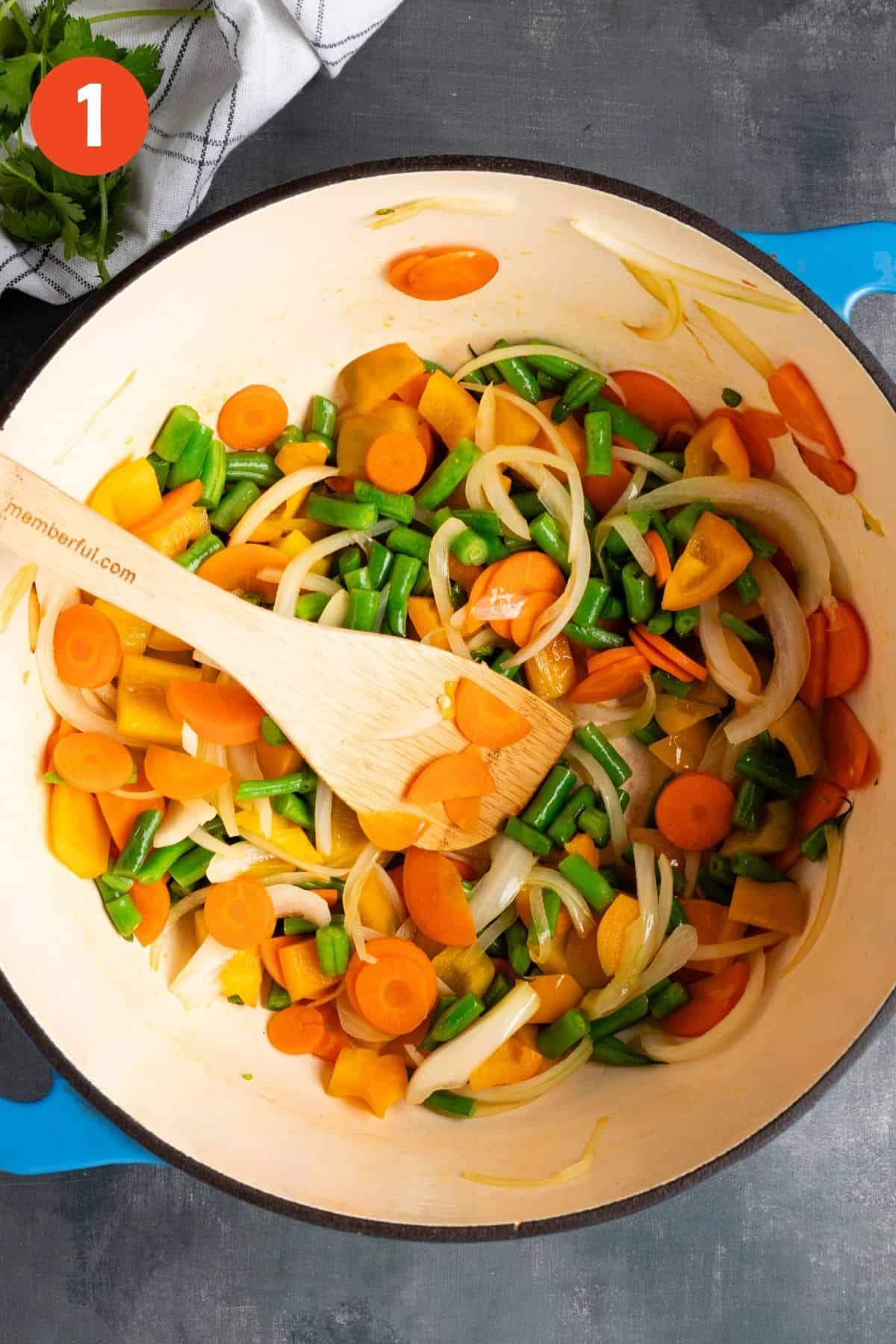
Step 1: Sauté the veggies. Cook the onion, bell pepper, carrots, and green beans in 1 tablespoon of coconut oil in a Dutch oven until softened but still brightly colored. Set aside in a bowl.
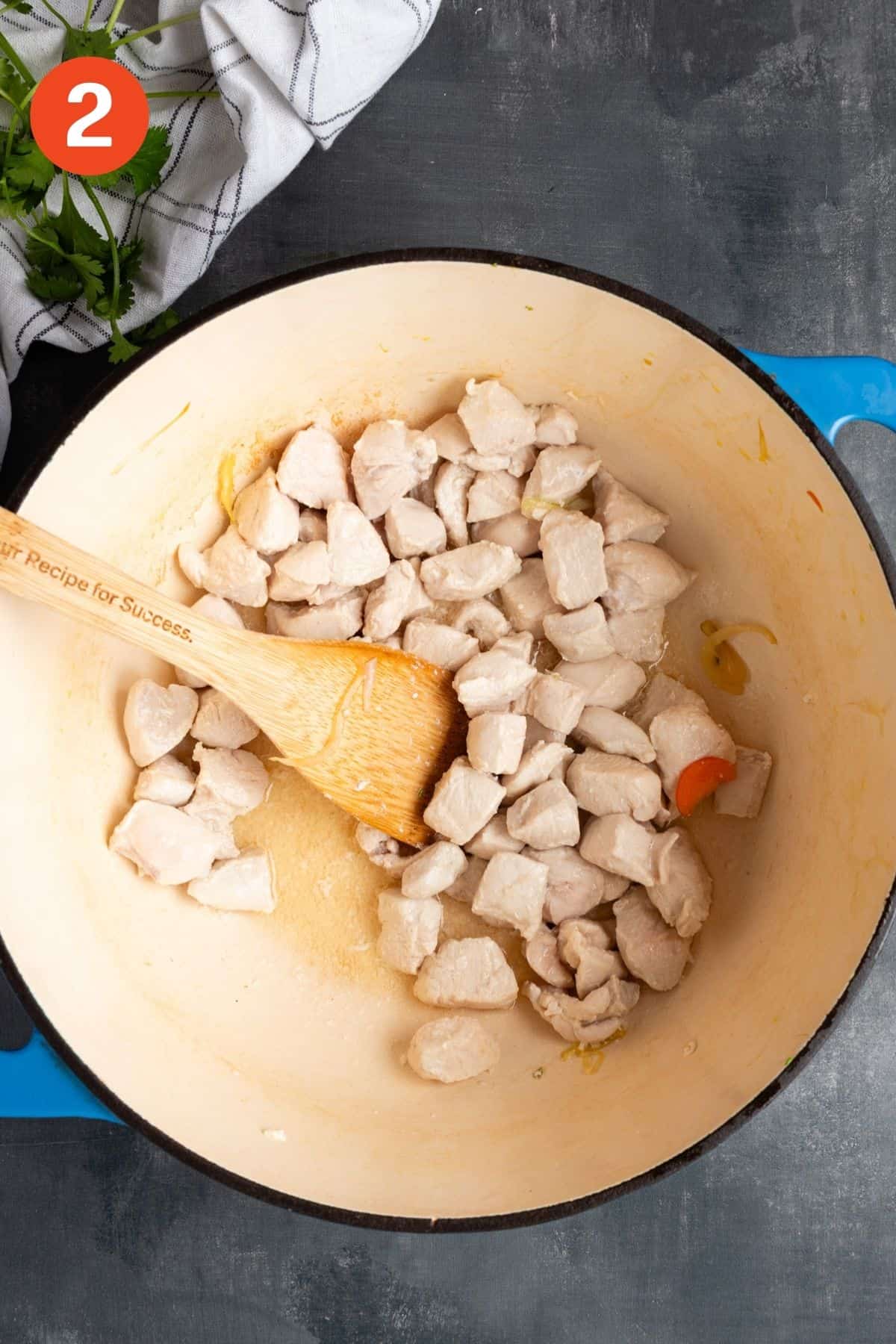
Step 2: Cook the chicken. Add another tablespoon of oil, and then stir-fry the chicken for 6-7 minutes, until nearly cooked through. Transfer to the bowl with the vegetables.
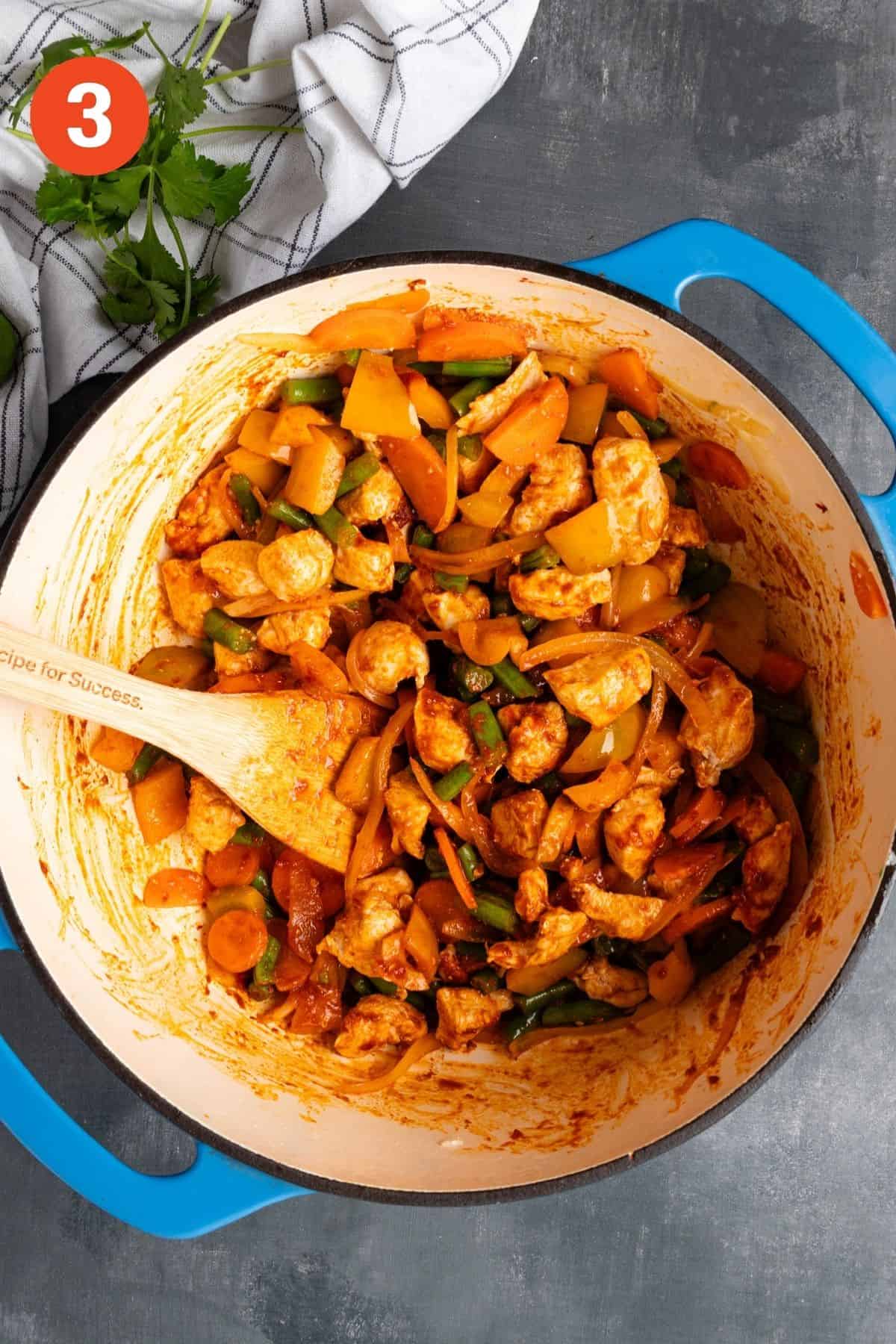
Step 3: Bloom the curry paste. Add the remaining oil and red curry paste to the pot. Stir constantly for 30 seconds until fragrant-that's your restaurant-level flavor booster. Return the chicken and veggies to the pot, stirring to coat with the curry paste.
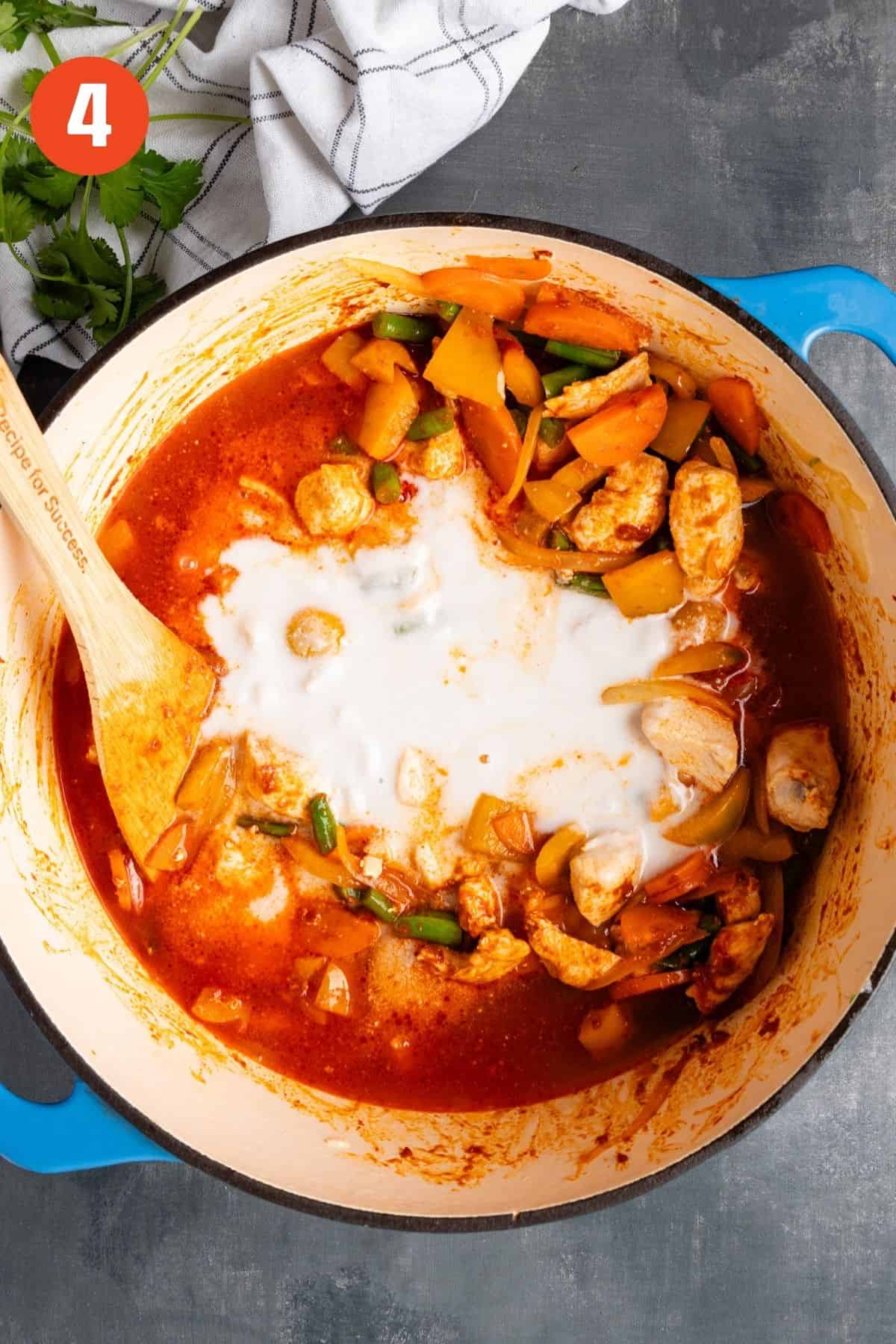
Step 4: Simmer. Pour in the coconut milk and chicken broth. Bring to a simmer and cook 5-6 minutes until vegetables are tender.
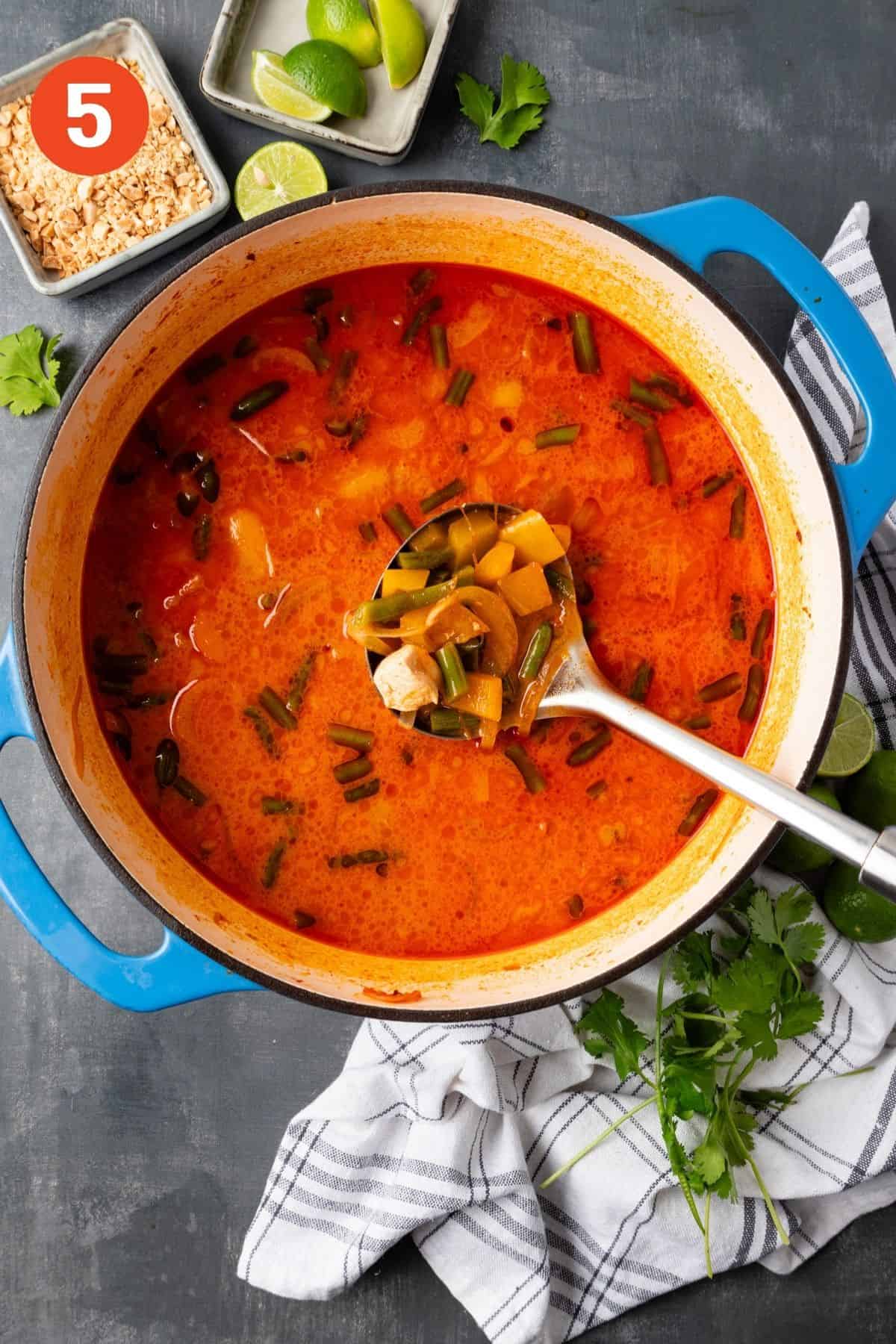
Step 5: Finish the broth. Stir in the lime juice, agave or maple syrup, and fish sauce. Taste and adjust seasoning. Serve red Thai curry soup over jasmine rice or rice noodles. Top with cilantro, Thai basil, peanuts, and lime wedges.
Lyn's Top Tips
- Bloom your curry paste. This step is where all the flavor comes alive so don't rush it. Heating the curry paste in a little oil wakes up the aromatics and helps them dissolve into the broth instead of staying grainy or muted. Blooming also deepens the color, smooths the texture, and builds that rich, restaurant-style flavor you can't get if the paste goes straight into liquid.
- Adjust spice by brand. Some pastes are mild, others are fiery. Start small and build up especially if you aren't a fan of spice.
- Rice vs. Noodles: Serving this soup over steamed jasmine rice gives it a thicker, almost stew-like coziness that soaks up the coconut curry broth. If you're in the mood for something lighter and brothy, rice noodles turn it into a classic Thai noodle soup with long, silky strands that catch all those warm curry flavors.
- Taste before adding more salt. Fish sauce adds saltiness and umami, so be sure to taste before adding more salt to your own tastes.
- Store leftovers properly. Let the soup cool completely, then refrigerate leftovers in airtight containers for up to 4 days. The flavors actually get even better as they sit. Store the rice or noodles separately, otherwise they'll soak up the broth and turn too soft. Reheat gently on the stovetop or in the microwave, adding a splash of broth or water if the soup thickens in the fridge.
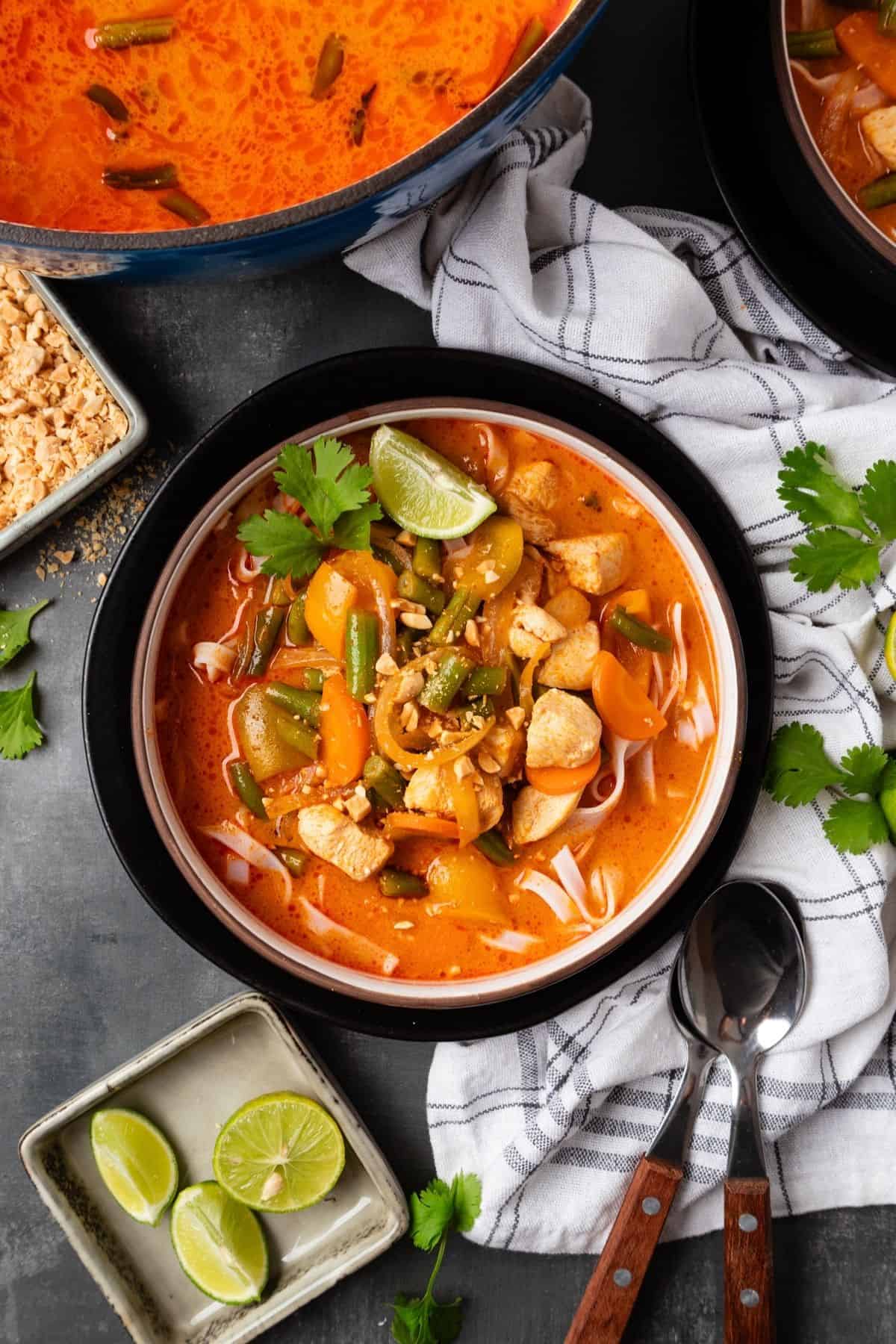
Soup-er Toppings & Serving Suggestions
This Thai curry chicken soup plays well with all kinds of cozy sides:
- Spoon over steamed jasmine rice for a heartier bowl, serve with rice noodles for a more traditional Thai noodle soup vibe, or simply skip the carbs for a red curry chicken soup with vegetables.
- Add a side of crispy spring rolls, steamed edamame, or a quick cucumber salad to turn this soup into a full meal.
- Pair with a simple carb like naan, garlic flatbread, or rice paper crackers.
Thai Curry Soup Recipe FAQs
Thai red curry soup usually lands in the mild to medium range with a warm, gentle heat rather than a fiery burn. The spice level depends almost entirely on how much curry paste you use and how naturally spicy your paste is. If you prefer a milder soup, start with a smaller amount and let the coconut milk soften the heat. For a bolder kick, simply add more curry paste or stir in a spoonful at the end to taste. My favorite paste, Mae Ploy, runs naturally spicier than most, so a little goes a long way. You can always brighten the bowl with a squeeze of lime or a splash of broth if you accidentally go overboard.
Yes, Thai red curry soup freezes surprisingly well, with one small tweak. For the best texture, freeze the soup without the rice or noodles and add those fresh when you reheat it. Starches tend to soak up the broth and turn soft or mushy in the freezer.
Let the soup cool completely, then transfer it to airtight containers, leaving a little room at the top for expansion. Freeze for up to 3 months. Coconut milk-based soups can sometimes separate a bit as they thaw, so don't panic if it looks slightly grainy at first. Just reheat it gently over low to medium heat, stirring often, and it will usually come back together.
When you're ready to serve, cook a fresh batch of jasmine rice or rice noodles and ladle the hot curry soup over the top. Add your herbs, peanuts, and lime right before serving so they stay bright and fresh.
Use tamari, soy sauce, coconut aminos, or simply season with salt instead.
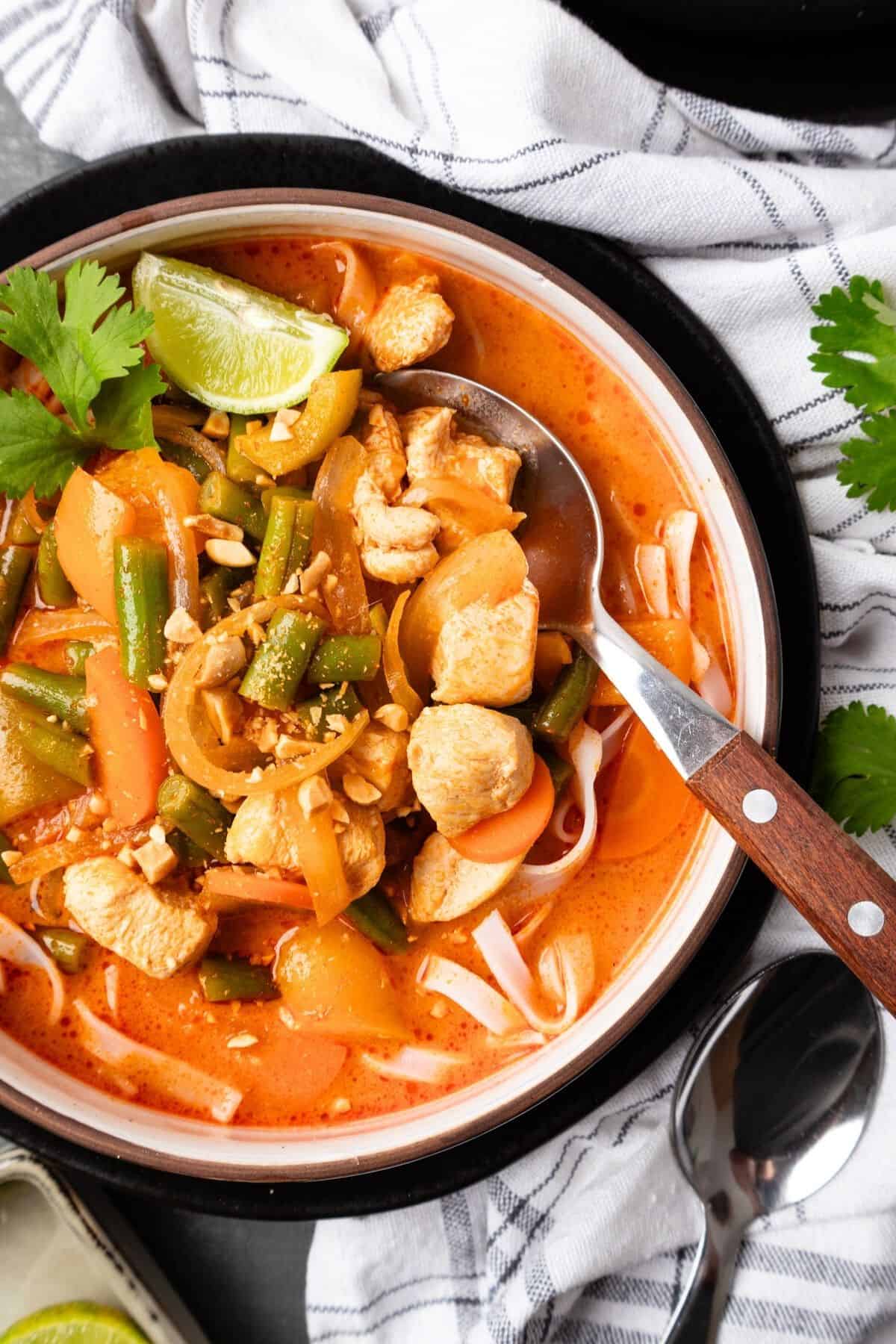


Thai Red Curry Soup
Equipment
Ingredients
- 3 tablespoons coconut oil divided
- 1 cup thinly sliced yellow onion
- 1 sweet bell pepper cut into 1-inch pieces
- 1 cup carrots cut into thin coins
- 1 cup chopped green beans
- 1 ¼ lb boneless skinless chicken breasts cut into 1-inch pieces
- 3-4 tablespoons red curry paste adjust to taste (see notes below)
- 1 15-ounce can coconut milk preferably full-fat
- 1 quart low-sodium chicken broth 4 cups
- 2 tablespoons fresh lime juice
- 2 tablespoons agave syrup or maple syrup
- 2 tablespoons fish sauce
- Steamed Jasmine rice or rice noodles for serving
- Chopped cilantro and/or Thai basil for serving
- Roasted peanuts for serving
- Lime wedges for serving
Instructions
- Heat a large pot or Dutch oven over medium-high heat. Add 1 tablespoon coconut oil. Once melted, add the onion, bell pepper, carrots, and green beans. Stir-fry for 6-8 minutes, stirring frequently, until the onions begin to soften but the beans and carrots are still slightly firm. Transfer vegetables to a large bowl and set aside.
- Return the pan to the heat and add another tablespoon of coconut oil. Once melted, add the chicken and stir-fry for 6-7 minutes, stirring often, until mostly cooked through. (It's okay if a few pink spots remain; the chicken will finish cooking in the soup.) Transfer chicken and any juices to the bowl with the vegetables.
- Add the remaining tablespoon of coconut oil to the pan. Once melted, add the red curry paste and cook, stirring constantly, for 30 seconds until fragrant.
- Return the chicken and vegetables to the pot. Cook for 1-2 minutes, stirring well, until evenly coated in the curry paste.
- Add the coconut milk and chicken broth. Increase the heat to medium-high, bring the soup to a simmer, and cook uncovered for 5-6 minutes, until the green beans and carrots are tender.
- Reduce the heat to low. Stir in the lime juice, agave syrup, and fish sauce until combined.
- Serve hot, ladled over steamed rice or rice noodles. Garnish with cilantro and/or Thai basil, roasted peanuts, and lime wedges. Enjoy!
Recipe Tips
- Bloom the curry paste. Heating the paste in a little oil wakes up the aromatics and helps it blend smoothly into the broth, giving you deeper color and that rich, restaurant-style flavor.
- Adjust the spice to your taste. Curry pastes vary in heat, so start small and add more as you go. If you like a spicy soup, you can go up to five tablespoons.
- Choose rice or noodles. Jasmine rice makes the soup thicker and cozier, while rice noodles keep it light and brothy with a classic slurpable feel.
- Not a fan of fish sauce. If you're unsure about the flavor, start with 1 tablespoon and add more gradually-or simply season with salt instead.
- Taste before salting. Fish sauce brings both saltiness and umami, so always taste the broth before adding extra salt.
- Make it thicker, like a traditional curry. Reduce the broth to 2-3 cups for a thicker consistency that's perfect for spooning over rice or noodles.